
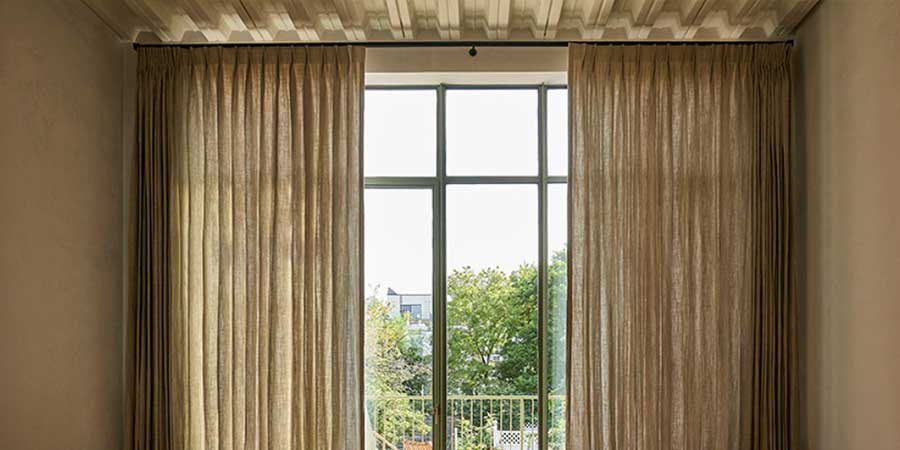
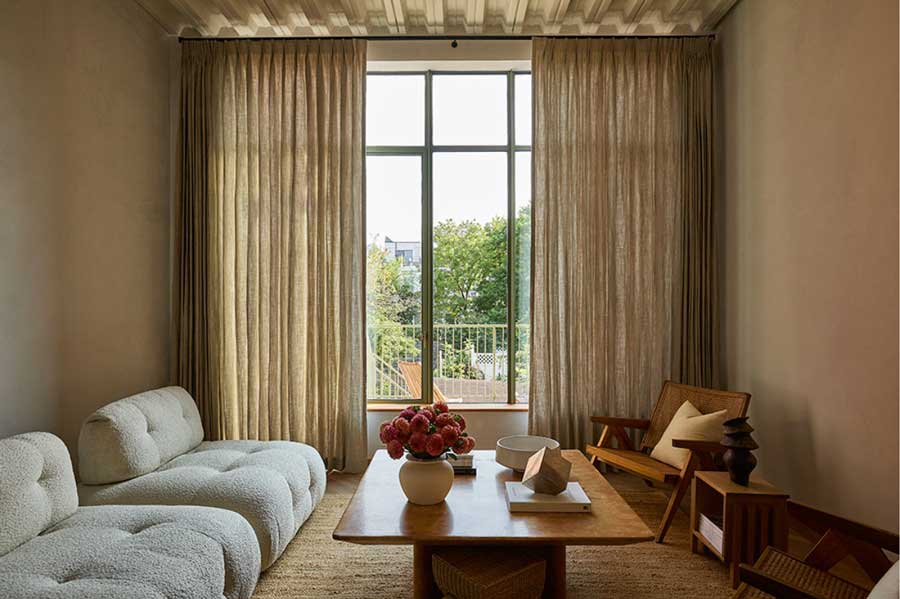
Pinch pleat drapery adds a layer of beauty to the window while bringing dimension and charm into the overall look of the room. Well-known for their tailored appearance, this classic header style enhances your home with timeless elegance. Pinch pleat draperies are available in a wide range of fabrics and hardware combinations, with specific characteristics chosen to affect the fullness, detailing and flow of the draperies themselves. Let’s learn more about this popular header style and discover why homeowners continue to choose the pinch pleat look when considering custom window treatments.
Defining Pinch Pleat Drapery
“Pinch pleats” are a style at the header (or top) of the drape. Custom draperies are crafted from curated fabrics that suit your personal preference. Pleats come in a variety of shapes, with fabrics pinched together and sewn for the pleated result. The stitching can occur in different spots near the top of the drapery, creating a defined style. Some techniques offer fabric structure when open and closed, while others are more relaxed, shifting a bit, offering a softer look at the window.
Modern vs Traditional Pinch Pleat Drapery
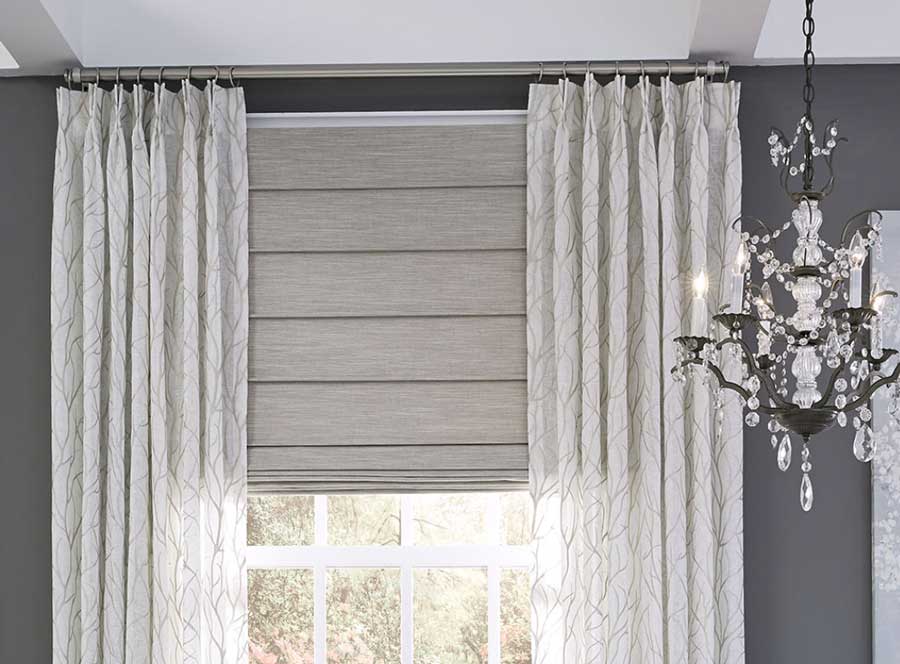
One question homeowners ask is whether pinch pleat drapery is considered modern or traditional. Honestly, it depends on which fabrics you choose, the style of your space, which pleat you select—and so much more. Pleat pleat drapery is timeless—and can go with so many design statements. The amount of pleats will influence how formal the drapes look, while the style and weight of the fabric can change their expression.
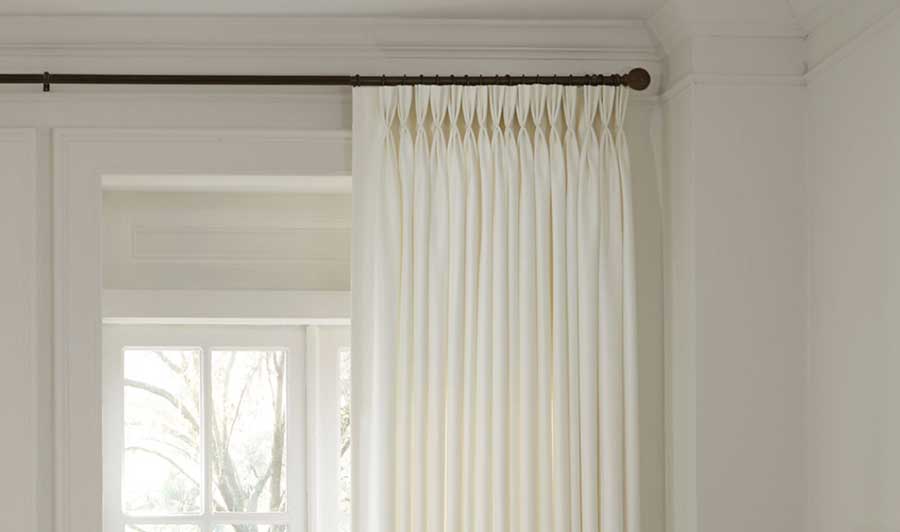
Hardware—such as brass, matte black, wood, brushed nickel and others—can shift the tone towards farmhouse, coastal or transitional. Layering draperies with shades will add a bit more designer detailing at the window, capable of creating either a modern or traditional look.
How Do Double and Triple Pleats Differ?
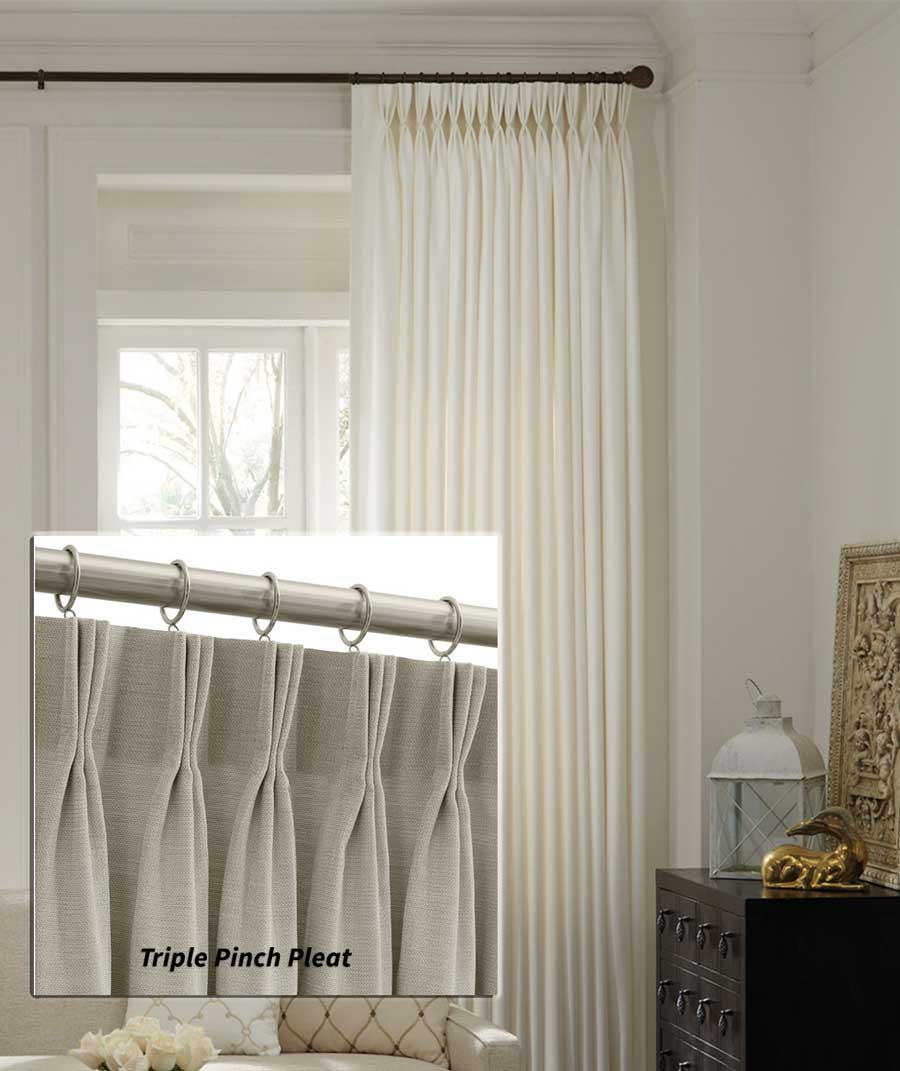
The number of pleats that go into a drape makes up the overall shape and style. Double pleats, a popular choice, involve two folds that form a ‘V’ shape above and below the spot where they are tacked together. Triple pleats feature three fabric folds that gather in the same manner as the double pleat. This technique results in the shape of a ‘W.’ Triple pleats are often considered more formal than double.
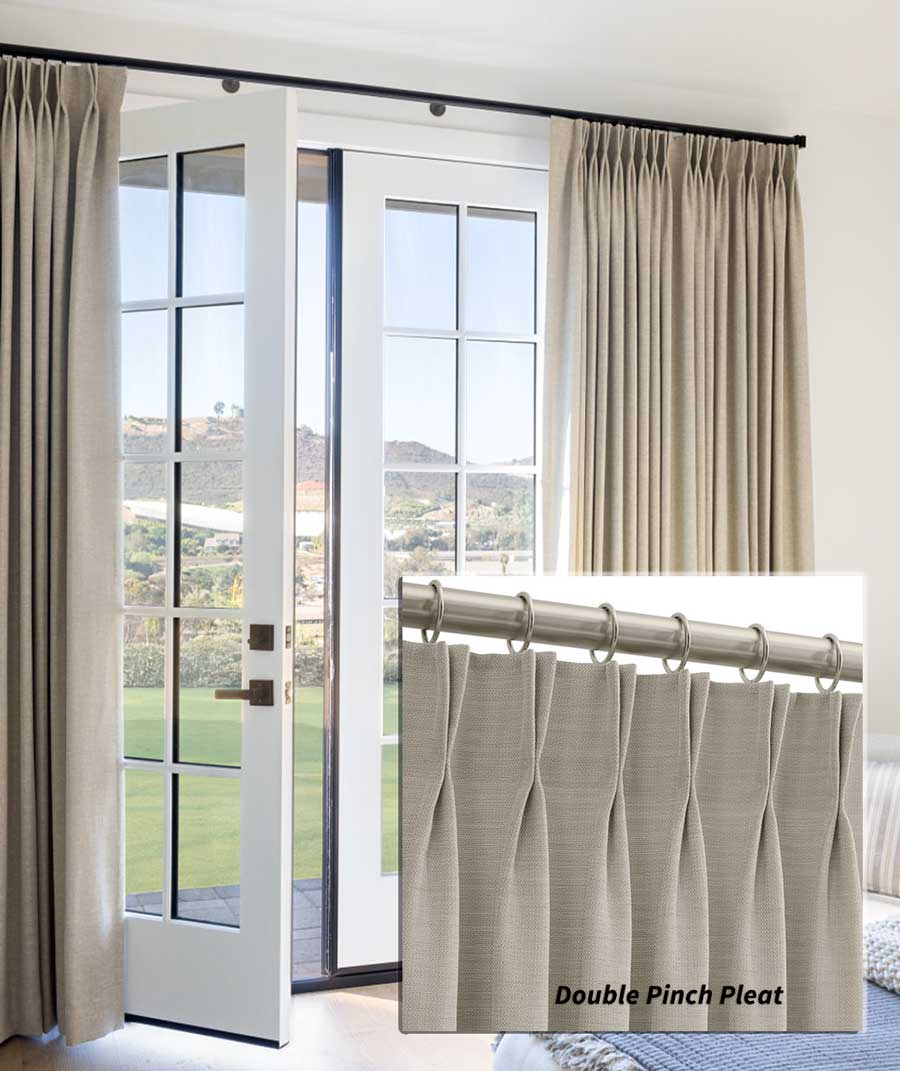
Since additional fabric is used to create more pleats, they can weigh more and hang slightly heavier than double pleated fabric, as well as cost a little more. Double pleats are less bulky and create more of a flowing look.
Pinch Pleat or Euro Pleat?
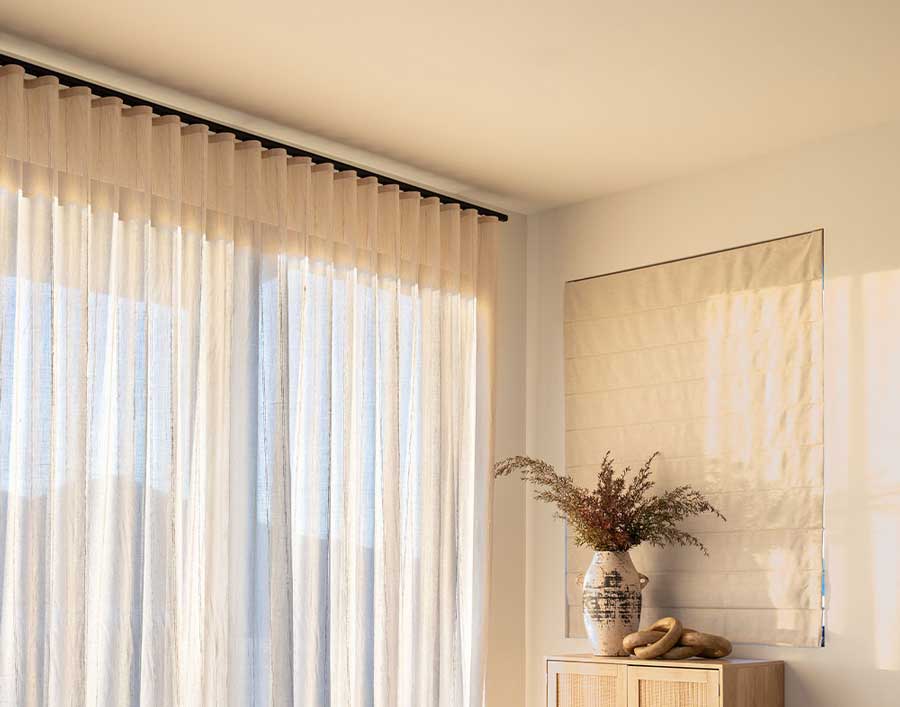
Euro pleats are considered a type of pinch pleat drapery. The fabrics of the Euro pleat are gathered, but sewn at the top or near the top, instead of sewing them partway down. This creates an ‘inverted’ look with the gathering visible at the top. Pleats are more open as they hang down the window. This header style is often thought of as more casual than traditional pinch pleats, but the overall statement truly depends on the fabrics used and the style of the room.
What Are Ripple Fold and Grommet Styles?
The header is a very important aspect of styling your windows. We’ve focused on pinch pleat draperies—and all the varieties you can choose from. Now, we should define two other header styles that are popular, but are not considered pinch pleat. Ripple fold drapes and grommet drapes are both top contenders in trending drapery details.
Ripple Fold
Ripple fold draperies create a soft look, using a special track that allows the fabric to move fluidly at the window. The header is made up of consistent, curved fabrics that remain uniform as they open, close and adjust.
Grommet
Grommet, on the other hand, features metal rings, stamped into the fabric at the top. These grommets are laced over the drapery rod in an alternating pattern, creating curved folds. The grommets slide back and forth across the drapery rod to open and close. The grommets should coordinate with the material of the rod for aesthetic purposes, creating a beautiful overall look.

Are Pinch Pleat Draperies Motorized?
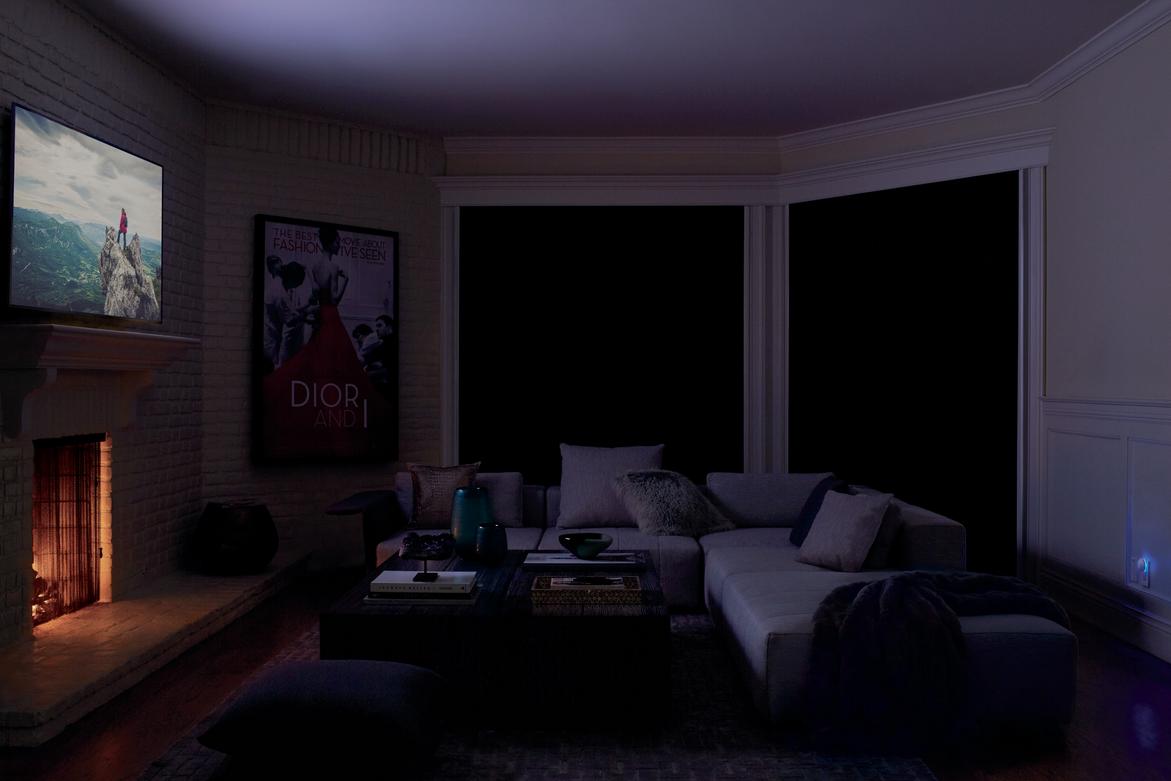
We love this question because we get to tell homeowners that “yes, they absolutely can be motorized!” Window treatment motorization is not just a trend; it is a lifestyle. There’s no going back from having drapes that move as needed on a schedule and help conserve energy and save your home from too much light. The Hunter Douglas PowerView® automation system controls smart drapes with an app on the phone, remote, or voice command. Simply touch a button and watch them move!
Ready for Pinch Pleat Drapery?
With new draperies or shades, it can be hard to decide which direction to go in. That’s where our team at Night and Day Decor comes in. Our experts will help you design functional drapes with fabulous designs you will love for years to come. Visit one of our showrooms in the Toronto area, or get in touch to schedule your free at-home design consultation. We are happy to help you design the window solutions of your dreams.